
47% of Workers Now Spend More Time Managing AI Than Doing the Work Itself. Two-Thirds Say It's Made Them Happier. Both Are True.
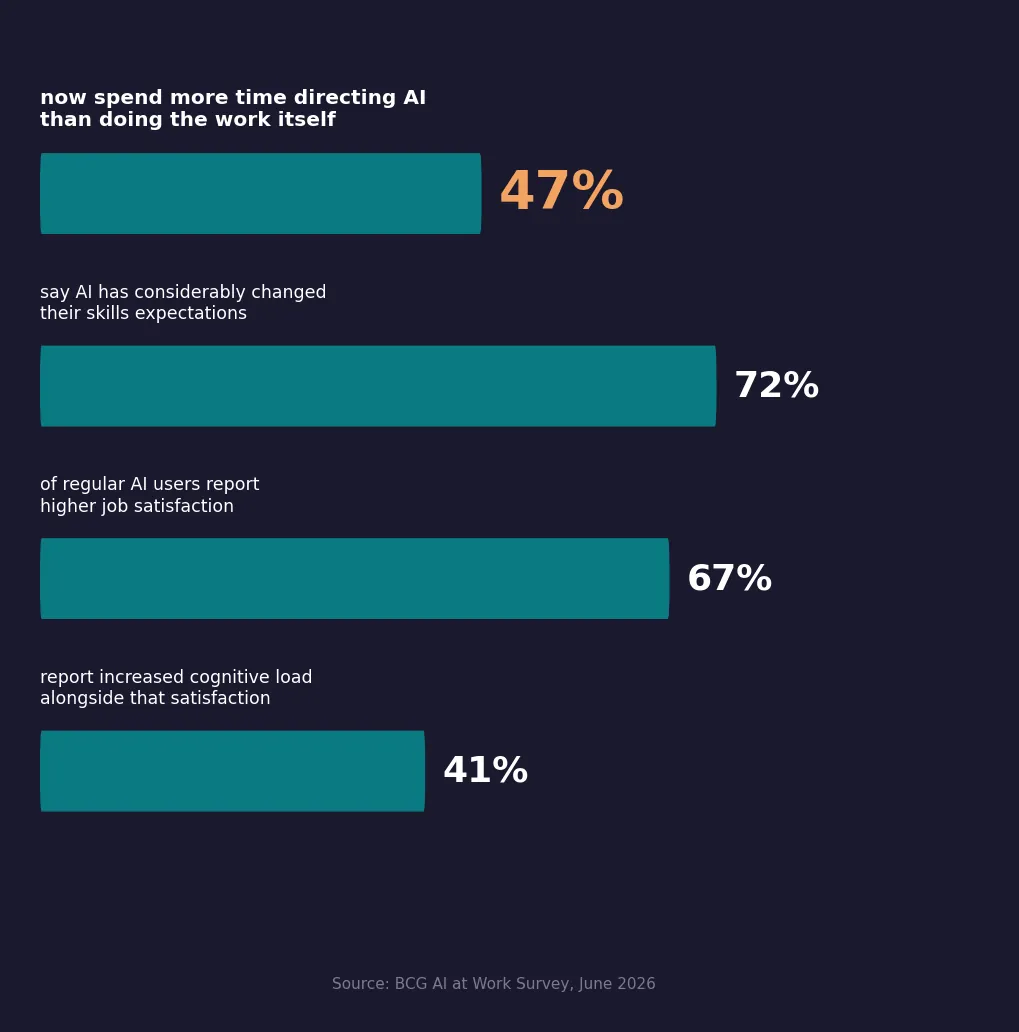
BCG surveyed 185,000 workers globally. Nearly half now spend more time directing AI than doing the actual work. Two-thirds say they're happier for it.
47% of workers now spend more time managing AI than doing the work itself. Two-thirds say it's made them happier. Both can be true.
This is BCG's finding from last week — their fourth annual AI at Work survey, across more than 185,000 respondents globally. It's one of the most honest things the data has said about AI in a while.
We expected efficiency gains. We expected some job anxiety. We did not fully anticipate that humans would become AI managers — at scale, without a job description, and without any meaningful training for the transition.
Think of it this way:
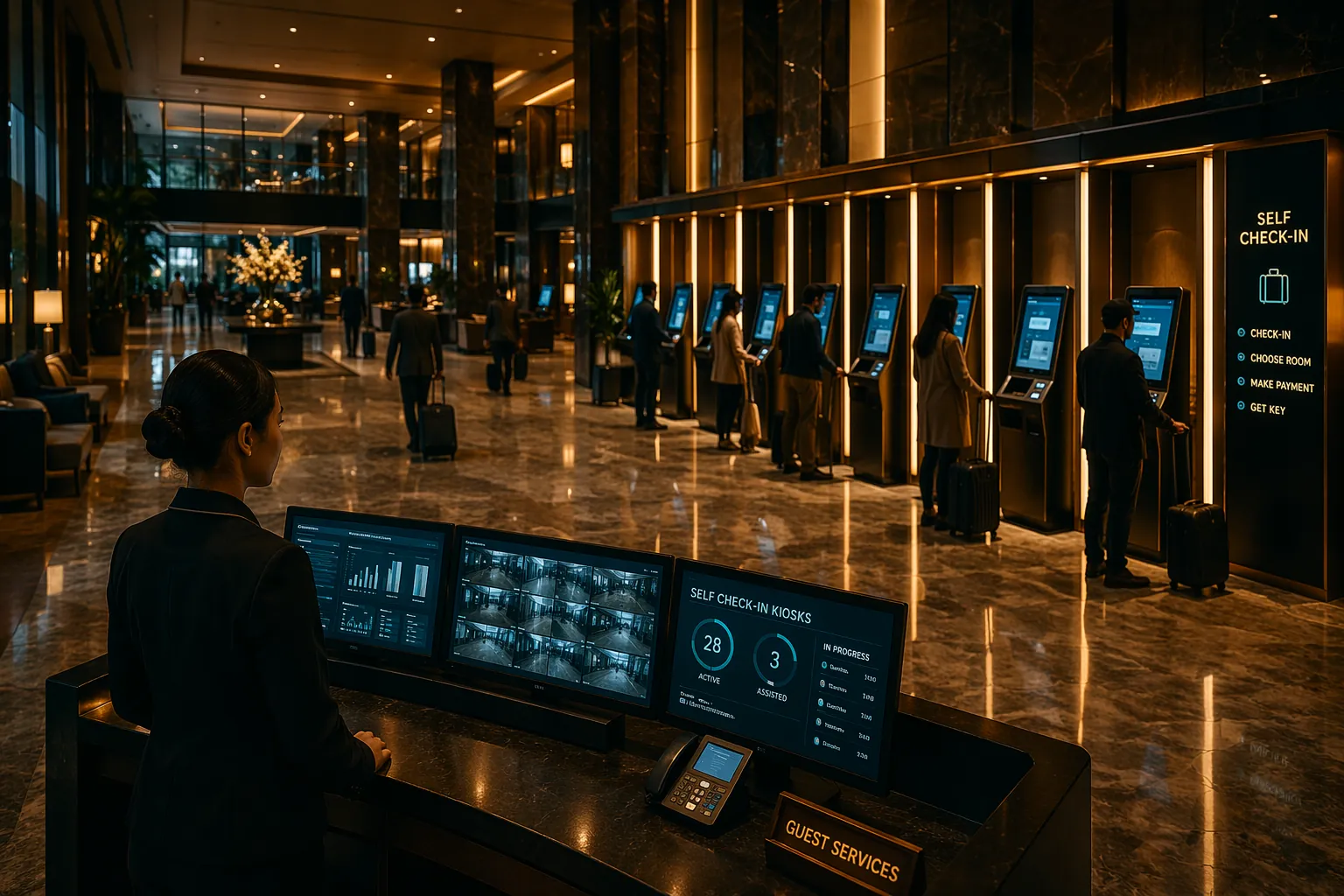
The front desk associate used to check in guests one by one. Now the kiosks handle the queue. She monitors four screens simultaneously — catching exceptions, stepping in when the system flags an issue, resolving what automation can't.
She never applied for a management role. She wasn't trained to supervise systems. But that's the job now.
She's not faster at the old job. She's doing a fundamentally different job — and nobody gave her a new title, new training, or a new job description to go with it.
The real question:
BCG also found that strategy — not tools — is what separates organizations seeing real returns. A clear AI workflow strategy lifts measurable business impact by 25 percentage points. Better tools alone move it by about 5.
HR and L&D leaders: the job has already changed for nearly half your workforce. The training programs haven't caught up. The question is not whether to reskill people for AI collaboration — it's how quickly you can build the judgment your people now need to supervise systems that never clock out.
Sources
- BCG, "AI Is Reshaping Jobs Faster Than Companies Are Reshaping Work," June 3, 2026
Ian Xie
June 12, 2026
ian.us.ci