
Beyond The Code
> _“It is easy to judge the mistakes of others, difficult to recognize your own.”_ > > _— The Buddha_
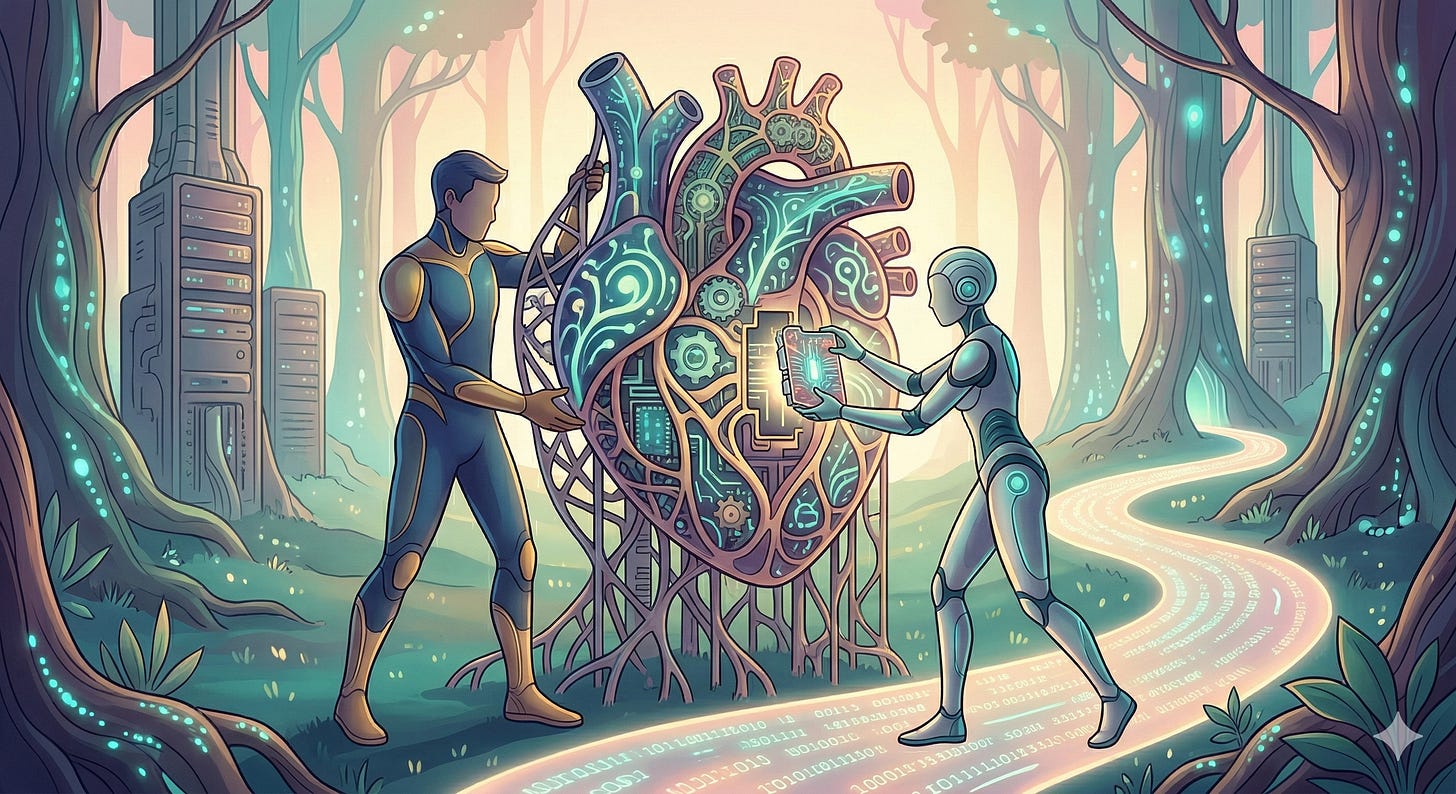
Why Tech Leaders Need to Engineer Empathy
“It is easy to judge the mistakes of others, difficult to recognize your own.”
— The Buddha
In the tech industry, we are obsessed with speed, optimization, and raw intelligence. We worship at the altar of “smart.” But in our race to build faster and optimize better, we often leave something critical behind: our empathy.
It is incredibly easy for tech leaders to fall into a place of judgment. We look at users or colleagues who are “slow” to adopt a new platform, who struggle with a workflow, or who simply don’t grasp the technical nuances, and we get annoyed. I hear leaders say it all the time: “You should try this. Try that… it it that hard?”
It is remarkably easy to say that when we are operating within our own strengths. But we are not them, and we do not know them. If someone is struggling, there is a reason.
This is what happens when you read one too many blog posts about "productivity" and decide you should probably automate something that was working fine as it was.
The Cello, the Guitar, and the Illusion of Expertise
“The only true wisdom is in knowing you know nothing.”
— Socrates
Sharing my own blind spots during a humbling moment at home a few years ago. I’ve been playing the guitar for a long time, so I was thinking it would be fun to accompany my daughter while she play cello. That was before she went to UK studying cello performance last year.
As we tried to play together, it hit me like a ton of bricks: I am entirely out of my depth. I never went beyond the elementary level in music. Sitting there next to her, fumbling over my chords while she effortlessly commanded the cello, I felt completely “dumb” in her world.
And then, a second realization washed over me. This feeling of being clumsy, slow, and frustrated? This is exactly how she feels when I try to teach her about coding and AI.
When I talk to her about technology, I am the one operating from a place of deep expertise, often wondering why she doesn’t catch on faster. The guitar and the cello showed me exactly what it feels like to be on the other side of that equation.

The Patience Gap: Are We Shortchanging Our Teams?
When my daughter struggles with tech, or when I struggle with music, we offer each other grace. We say, “Go on, you can do this.” We provide warmth and encouragement rather than making each other feel left behind.
But why does that patience so often evaporate when we step into the office?
We are rarely as patient with our colleagues as we are with our families. We expect instant comprehension and flawless execution. But when we deny our colleagues that same grace, we have to ask ourselves: is this their misfortune, or is it ours? How much potential are we squandering by fostering an environment of judgment rather than one of support?
Building Tools for Human Connection
As a HR Tech professional, I see the intersection of human struggle and digital transformation every single day. Tech leaders shouldn’t just be building tools to extract productivity; we should be developing tools that help ourselves be more empathetic. We need systems that remind us that people are different, with different backgrounds, cognitive loads, and daily battles.
We cannot afford to feel too good about ourselves or let arrogance take root. If we do, we will eventually be the ones left behind, waiting for the day when a younger, smarter generation of engineers points their fingers and laughs at our obsolete methods.

In my defence, I thought this reflection would be short. It was not. Empathy, annoyingly, requires detail.
Remember, technology is the most powerful lever we have. Let’s use it to bridge the gap between us. Let’s build to care, to empower, and to reduce friction for real people, not simply to show off clever architecture in demo mode.
Ian Xie
April 16, 2026
ian.us.ci